Most people don't realize how much food they throw away every day — from uneaten leftovers to spoiled produce to parts of fruits and vegetables that could be eaten or repurposed.
One-tertiary of all food in the Us goes uneaten. EPA estimates that in 2018, about 81 percent - xx.3 tons - of households' wasted food ended up in landfills or combustion facilitiesone.
Preventing food from going to waste product is one of the easiest and well-nigh powerful actions you can take to save money and lower your climate change footprint by reducing greenhouse gas (GHG) emissions and conserving natural resource.
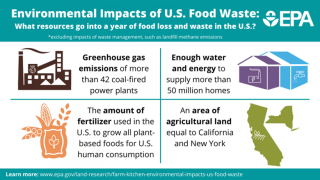
Click this image to enlarge it.
Relieve coin by buying just what yous need, eating what you buy, and avoiding throwing abroad food. The average family of four spends $1,500 each yr on food that ends up uneaten.
Reduce your environmental and climate change footprint.
Conserve resources and energy. When food is wasted, the country, h2o, free energy, and other inputs that are used in producing, processing, transporting, preparing, storing, and disposing the nutrient are wasted as well.
Reduce greenhouse gas (GHG) emissions. More 85 percent of GHG emissions from landfilled food waste issue from activities prior to food entering a landfill, including the production, transport, processing, and distribution of foodii. Plus, when food decomposes in a landfill, marsh gas, a potent greenhouse gas, is emitted—and food is the single largest category of material placed in municipal landfills.Municipal solid waste product landfills are the tertiary-largest source of human-related methane emissions in the Usa.
Ways to Foreclose Wasted Food at Home
Planning, prepping, and storing food can assist your household waste less food. Below are some tips to aid you do only that:
Planning and Shopping Tips
Making a list with weekly meals in mind tin can save you coin and time. If you only purchase what yous look to apply, you will exist more than likely to keep information technology fresh and use it all.
Keep a running list of meals and their ingredients that your household already enjoys - that way, you can hands cull, shop for, and prepare meals that y'all are likely to consume.
Look in your refrigerator, freezer, and pantry first to avoid buying food you already have. Make a list each week of what needs to be used up and plan upcoming meals effectually it.
Programme your meals for the week earlier you become shopping and purchase only the things needed for those meals.
Make your shopping list based on how many meals y'all'll eat at dwelling. Consider how oftentimes you lot volition swallow out, if y'all plan to swallow frozen precooked meals, and if you will swallow leftovers for any of your meals.
Include quantities on your shopping list noting how many meals you lot'll make with each detail to avoid overbuying. For example: "salad greens - enough for two lunches".
Ownership in big quantities (e.chiliad., buy one, get one gratuitous deals) only saves money if you apply all the nutrient before it spoils.
Buying food from bulk bins tin can save you money and reduce food waste and packaging equally you can buy the corporeality of food you need every bit opposed to a pre-determined amount. When ownership in bulk, call up to store food properly in airtight, labeled containers.
Buy imperfect produce or upcycled products. Imperfect produce may accept concrete imperfections only is just as safe and nutritious and can sometimes exist found at discounted prices. Upcycled products are fabricated from ingredients that might accept otherwise gone to waste matter.
Storage Tips
Properly store fruits and vegetables for maximum freshness; they'll taste better and terminal longer, helping you to consume more than of them before they become bad.
Well-nigh veggies, especially those that could wilt (such every bit leafy greens, carrots, cucumbers, and broccoli) should go in the high humidity drawer of the refrigerator.
Almost fruits, likewise as vegetables that tend to rot (such as mushrooms and peppers), should go in the depression humidity drawer of the fridge.
Some fruits (such every bit bananas, apples, pears, stone fruits, and avocados) release ethylene gas as they ripen, making other nearby produce ripen, and potentially spoil, faster. Shop these away from other produce.
Wait to launder berries, cherries, and grapes until you're ready to eat them to prevent mold.
Some produce, such as potatoes, eggplant, winter squash, onions, and garlic, should be stored in a cool, dry, dark, and well-ventilated identify.
Make sure yous are properly storing nutrient in your fridge.
The refrigerator door is the warmest function of the fridge. You can store condiments there, only it is not recommended to store milk or eggs in the door.
The lower shelves are the coldest part of the fridge. Store meat, poultry, and fish here.
Refrigerators should be fix to maintain a temperature of 40 °F or beneath.
Store grains in closed containers and characterization the container with the contents and the date.
Befriend your freezer and visit information technology often. Freeze food such as breadstuff, sliced fruit, meat, or leftovers that you know won't exist eaten in fourth dimension. Label with the contents and the engagement.
Cooking and Preparation Tips
Produce that is past its prime, as well every bit odds and ends of ingredients and leftovers, may yet exist fine for cooking. Repurpose these ingredients in soups, casseroles, stir fries, frittatas, sauces, broiled goods, pancakes, or smoothies. You lot'll avoid wasting these items and may even create a new favorite dish.
If rubber and salubrious, utilize the edible parts of food that yous normally practise not swallow. For example, stale bread can exist used to make croutons, beet greens tin be sautéed for a delicious side dish, and vegetable scraps tin can be used for soup stock.
Larn the difference between "sell-by," "apply-by," "all-time-by," and expiration dates.
Aim to cook and serve the right portions for the number of people y'all are feeding.
Freeze, pickle, dehydrate, tin, or make jam/jelly from surplus fruits and vegetables - especially arable seasonal produce.
Don't get out perishable nutrient at room temperature for more than than 2 hours.
Refrigerate or freeze any leftovers in small, articulate, labeled containers with a date.
Toolkit for Your Abode and Your Community
The Food: Too Proficient to Waste Toolkit will help you effigy out how much food is really going to waste matter in your home and what you can do to waste matter less. Past making small shifts in how yous shop for, prepare, and store food, you can save time and money. It tin besides go on the valuable resource used to produce and distribute nutrient from going to waste!
Nutrient: Likewise Skilful to Waste material also contains an Implementation Guide that is designed to teach local governments and community organizations how to implement a Food: As well Good to Waste matter entrada in their community using the Toolkit.
If You Can't Reduce Wasted Food, Divert Information technology From Landfills
Nutritious, condom, and untouched food can be donated to nutrient banks to help those in need.
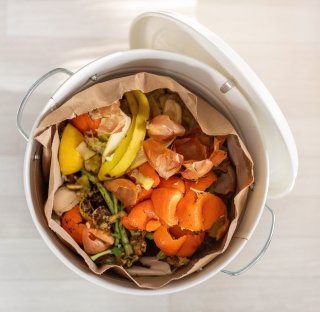
Compost food scraps rather than throwing them away.Learn more than through this infographic on composting.
Resources
U.S. Section of Agriculture (USDA):
Information for Consumers
Infographic- Piece of cake Steps to Prevent Nutrient Waste material (English, Chinese, Castilian)
Video - Tips to Reduce Food Waste at Abode
Video- Plan Ahead to Reduce Nutrient Waste material (English language, Castilian)
Video- Serve Smart to Reduce Nutrient Waste product (English, Spanish)
Video- Love Your Leftovers to Reduce Food Waste material (English, Castilian)
MyPlate- Meal Planning
Refrigeration and Food Safety
FoodKeeper App
U.S. Nutrient and Drug Administration(FDA):
How to Cut Nutrient Waste and Maintain Food Safety
Engagement Labels on Packaged Foods & Infographic
Tips to Reduce Food Waste (including three infographics)
Estimated from: U.S. EPA,Documentation for Greenhouse Gas Emission and Energy Factors Used in the Waste Reduction Model (WARM) Organic Materials Chapters (PDF), 2020.

0 Response to "What a Waste of Food You Know How Many People I Can Actually Feed That Are in Need of That"
Enregistrer un commentaire